

Introduction
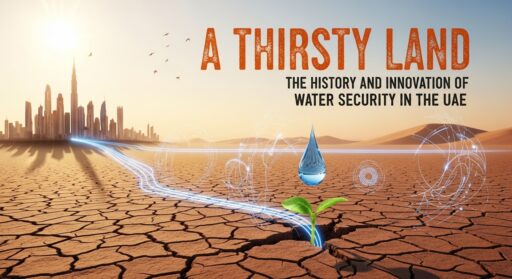
The image of the UAE is often one of vast, golden sand dunes, a landscape defined by its arid beauty. Yet, superimposed on this ancient canvas is a remarkable and growing patchwork of green. For decades, the UAE has been engaged in a monumental, seemingly paradoxical endeavor: greening the desert. What began as the visionary passion of the nation’s founders has evolved into a sophisticated, science-driven national strategy. These afforestation projects are far more than aesthetic pursuits; they are a critical component of the UAE’s fight against desertification, its strategy for climate change mitigation, and a profound expression of its will to improve the living environment for its people.
History
The greening of the UAE is inextricably linked to its founding father, Sheikh Zayed bin Sultan Al Nahyan. Long before sustainability became a global buzzword, Sheikh Zayed championed the planting of trees, famously stating, “We cherish our environment because it is an integral part of our country, our history and our heritage.” In the 1960s and 70s, he initiated the first large-scale planting programs, transforming the streets of Al Ain and Abu Dhabi with Ghaf, Palm, and Neem trees. His direct orders led to the creation of massive forested areas, such as the one surrounding the Al Wathba area. This foundational work demonstrated that with sufficient will and resources, the desert could indeed bloom, setting a national precedent for environmental transformation.
Key Features
Modern afforestation in the UAE is a complex, multi-faceted operation:
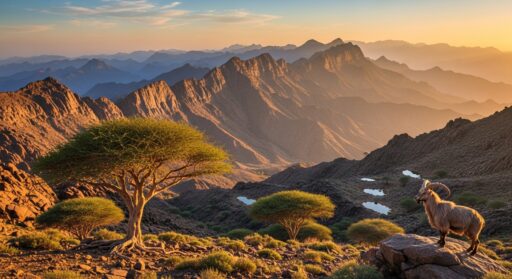
- Species Selection: The focus is on planting native and climate-resilient species like the drought-tolerant Ghaf tree (the national tree), the Samar tree, and the Sidr tree, which are naturally adapted to survive with minimal water.
- *Treated Wastewater Irrigation: A key innovation has been the widespread use of treated sewage effluent (TSE) for irrigation. This provides a sustainable water source for the forests, conserving precious freshwater reserves and recycling wastewater in a closed-loop system.
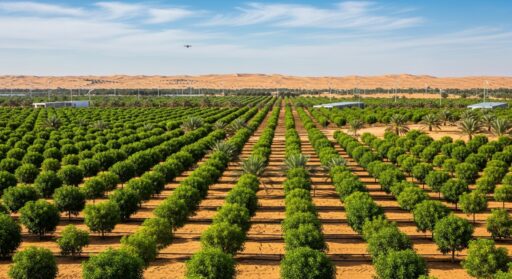
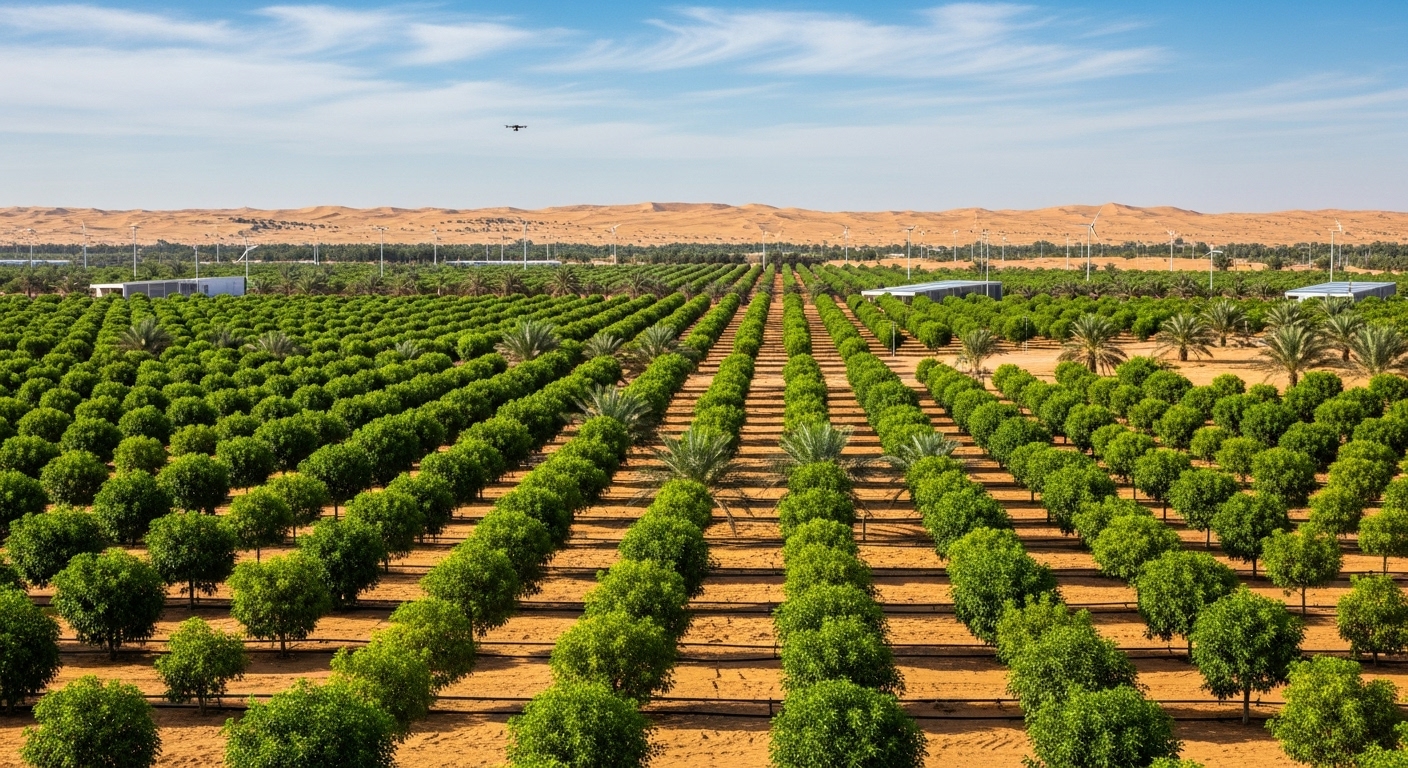
- Drip Irrigation Technology: To maximize water efficiency, vast networks of drip irrigation systems are deployed. These systems deliver water directly to the roots of each tree, minimizing evaporation and runoff, which is crucial in a hyper-arid climate.
- Urban and Desert Forests: Projects range from urban landscaping and city parks to the creation of large-scale “desert forests” on the outskirts of cities, which act as carbon sinks and help stabilize soil against sand encroachment.
Cultural Significance
The transformation of the desert landscape has had a deep psychological and cultural impact. For a population whose ancestors struggled daily with the harshness of the desert, the sight of lush greenery represents security, prosperity, and the triumph of human ingenuity over a challenging environment. Parks and forests have become central to modern Emirati social life, providing shaded spaces for family picnics and community gatherings. The Ghaf tree, in particular, holds cultural significance as a historical symbol of life and stability in the desert, and its preservation and propagation are a source of national pride, connecting the modern greening efforts to a deeper heritage.
Modern Relevance
Today, afforestation is a cornerstone of the UAE’s Net Zero by 2050 Strategic Initiative. Forests act as vital carbon sinks, absorbing CO2 from the atmosphere. Major projects like the “One Billion Tree” initiative and the Abu Dhabi Plantation Project are designed to significantly increase the country’s green cover, directly contributing to its climate goals. Furthermore, these forests enhance biodiversity by providing habitats for birds and other wildlife, reduce the urban “heat island” effect in cities, and improve air quality. They are also key to combating land degradation and desertification, protecting infrastructure and agriculture from sandstorms. The UAE is also investing in research to develop genetically modified saltwater-tolerant plants, pushing the boundaries of what is possible in desert afforestation.
Conclusion
The UAE’s mission to green the desert is one of the most ambitious environmental experiments on the planet. It is a powerful synthesis of traditional values and cutting-edge technology, of a deep respect for the past and an unwavering commitment to the future. The forests that now stand where once there was only sand are a living testament to visionary leadership and a national refusal to accept environmental limitations. They are not just collections of trees, but active agents in building a more sustainable, healthy, and resilient nation, proving that even the most arid land can be nurtured into a flourishing ecosystem.