

Introduction
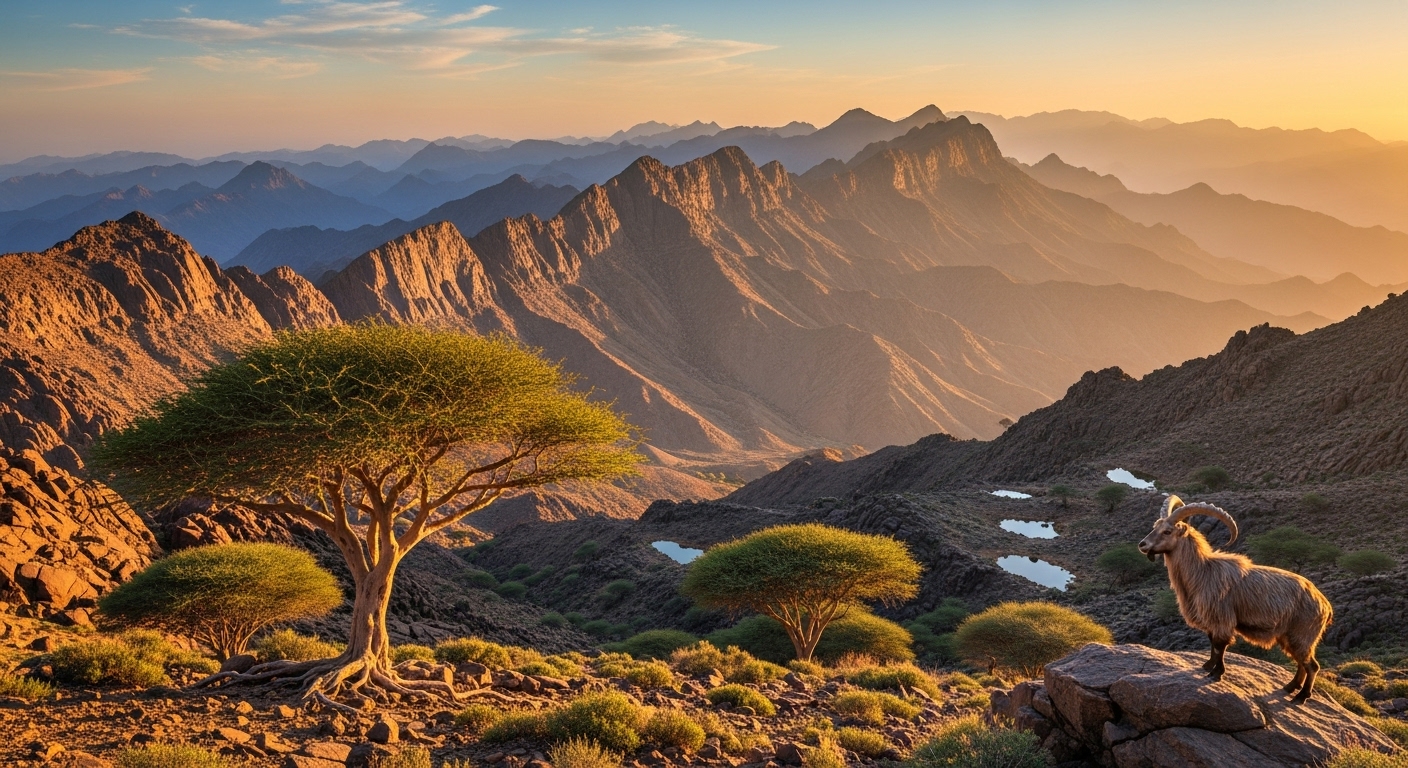
While the UAE is renowned for its desert landscapes, its eastern border is defined by a dramatic and rugged contrast: the Hajar Mountains. This rocky spine, the country’s highest peak, is a world apart from the rolling dunes—a haven of unique biodiversity and a crucial watershed. The Hajar range is an ancient and fragile ecosystem, home to endemic species found nowhere else on Earth and a repository of the nation’s geological and cultural history. Protecting these peaks from the pressures of development, overgrazing, and climate change is a critical environmental priority, essential for preserving the UAE’s natural heritage and water security.
History
The Hajar Mountains are among the oldest in the world, formed over 70 million years ago by the collision of tectonic plates. For millennia, they have been a refuge and a resource for human settlement. The higher rainfall in the mountains supported agriculture in terraced farms and allowed for the development of the ingenious aflaj irrigation systems. Villages nestled in the wadis were centers of date palm cultivation and trade. The mountains also provided a defensive stronghold. In the modern era, quarrying, road construction, and the development of agriculture and tourism have placed new stresses on this ancient landscape, threatening its delicate ecological balance and prompting the need for formal conservation.
Key Features
The Hajar Mountains host a distinct and specialized ecosystem:
- Unique Flora: The “wadi vegetation” includes hardy, drought-resistant trees like the thorny Christ’s Thorn Jujube (Ziziphus spina-christi) and the fragrant Sidr tree. The mountains are also home to the endangered Arabian Tahr, a sure-footed wild goat, and a haven for the elusive Arabian Leopard.
- Avian Biodiversity: The cliffs and wadis provide critical nesting sites for raptors like the Bonelli’s eagle and the Egyptian vulture, as well as for the Hume’s wheatear and other bird species.
- Aflaj Systems: These ancient irrigation channels are a UNESCO World Heritage site and represent a masterpiece of human ingenuity in water management, sustaining life in an arid environment for centuries.
- Geological Significance: The mountains offer a dramatic geological record, with exposed ophiolite sequences—sections of the Earth’s oceanic crust and upper mantle thrust onto the continent—providing invaluable insights into the planet’s geological history.
Cultural Significance
The Hajar Mountains are deeply woven into the cultural fabric of the northern emirates. They represent a history of resilience and adaptation, of communities carving out a life in a challenging but rewarding environment. The mountain forts and watchtowers that dot the landscape speak to a past of tribal territories and defense. The knowledge of mountain lore, from the medicinal uses of plants to the paths through the wadis, is a cherished part of the region’s intangible heritage. For modern Emiratis, the mountains offer a different kind of connection to nature—one of adventure, hiking, and exploration, providing a stark and beautiful contrast to the urban life of the coastal cities.
Modern Relevance
The conservation of the Hajar Mountains is vital for several reasons. First, they are a critical “water tower,” capturing scant rainfall and recharging the aquifers that supply freshwater to the region. Their degradation would directly impact water security. Second, they are a sanctuary for endemic and endangered species, making their protection a national and global conservation imperative. The UAE has established protected areas, such as the Wadi Wurayah National Park in Fujairah, a UNESCO Biosphere Reserve, which is a sanctuary for freshwater ecosystems and the Arabian Tahr. Sustainable tourism is being promoted to generate economic value from the mountains while ensuring their preservation. Managing the balance between development, recreation, and conservation is the key challenge for the future of this unique ecosystem.
Conclusion
The Hajar Mountains are the rugged, green heart of the UAE’s eastern region. They are not merely a scenic backdrop but a functioning, life-sustaining ecosystem of immense ecological and cultural value. Protecting these peaks is about more than saving individual species; it is about safeguarding a watershed, preserving a historical landscape, and maintaining a vital part of the nation’s natural identity. As the UAE continues to grow, the careful stewardship of the Hajar Mountains will ensure that this ancient, majestic landscape continues to tell its story for generations to come, offering a wild and beautiful refuge in a rapidly modernizing nation.