

Introduction
Rising from the desert on the outskirts of Abu Dhabi is a living laboratory for the future of urban sustainability: Masdar City. Conceived in 2006, the Masdar Initiative was a daring and visionary project to create one of the world’s most sustainable urban communities, powered entirely by renewable energy. More than just a “green” city, Masdar was designed to be a global hub for research, development, and innovation in clean technology. It represents Abu Dhabi’s strategic bet on a post-oil future, an ambitious attempt to leverage its energy expertise to become a leader in the global energy transition and a testbed for the technologies that will define the 21st century.
History
The Masdar Initiative was launched by the Abu Dhabi government as a subsidiary of Mubadala Investment Company. Its name, “Masdar,” means “source” in Arabic, reflecting its mission to be a source of knowledge and solutions for future energy needs. The cornerstone was the master-planned Masdar City, designed by the renowned architecture firm Foster + Partners. The project was officially unveiled in 2008, with the goal of creating a carbon-neutral, zero-waste city that would house a cluster of cleantech companies, research institutions, and the Masdar Institute of Science and Technology (established in collaboration with the Massachusetts Institute of Technology). While the original timeline for the city’s completion was ambitious and has been adjusted, it has steadily evolved into a thriving ecosystem of innovation.
Key Features
Masdar City incorporates a suite of cutting-edge sustainable design principles:
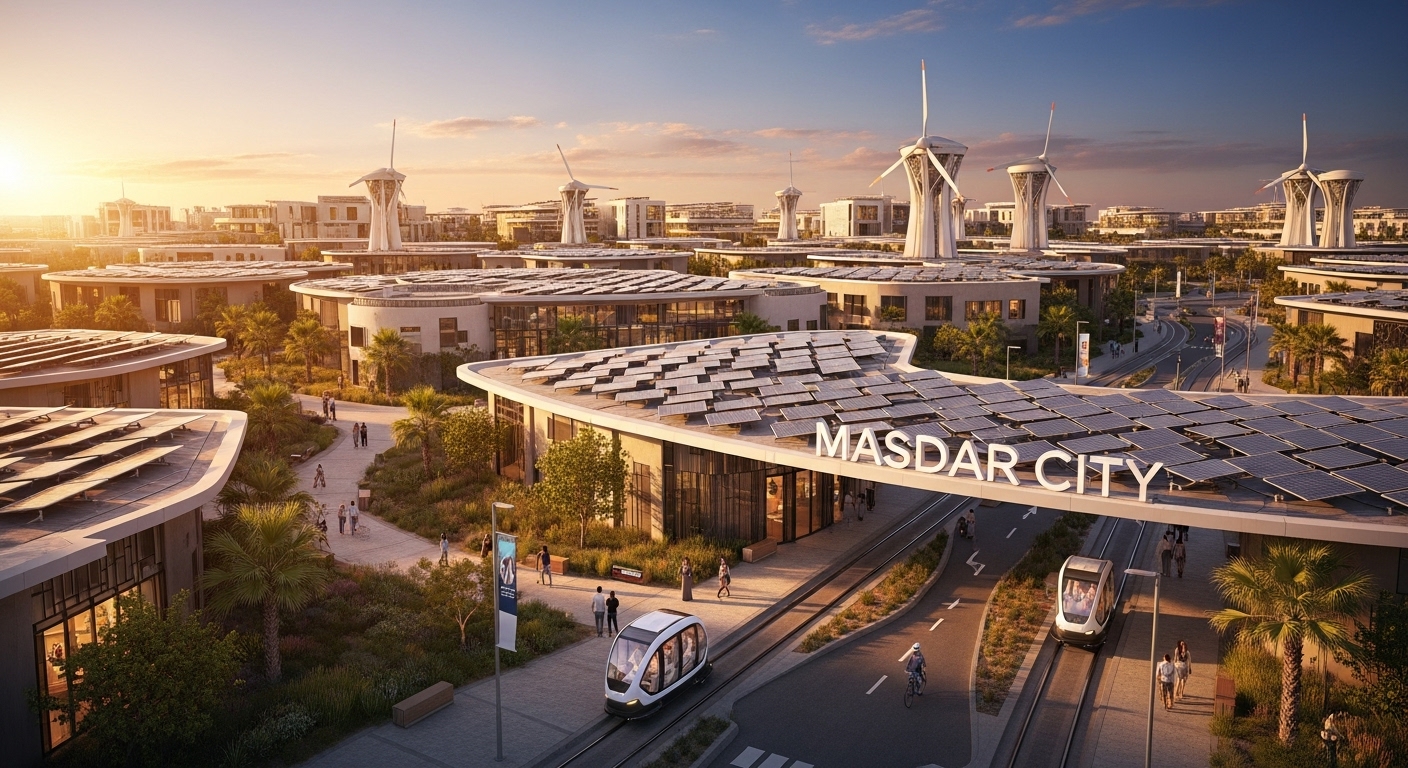
- Renewable Energy Powerhouse: The city is powered by a 10-megawatt solar photovoltaic plant and supplemented by one of the largest rooftop solar installations in the Middle East. It serves as a testbed for various solar and other renewable technologies.
- Passive Climate Design: Drawing on traditional Arabic architecture, the city’s design promotes natural cooling. Its narrow, shaded streets are oriented to capture desert breezes, creating a “solar chimney” effect that reduces the need for air conditioning.
- Sustainable Transportation: A hallmark feature is the Personal Rapid Transit (PRT) system—a network of driverless electric pods. The city is also designed to be walkable and prioritizes electric vehicles.
- Water and Waste Management: The city utilizes a smart grid for efficient energy and water use. It aims for maximum water recycling and has ambitious targets for diverting waste from landfills.
Cultural Significance
Masdar represents a profound shift in the identity of an oil-rich nation. It is a tangible declaration that the UAE is thinking beyond hydrocarbons and is actively investing in and building its future economy. For Emiratis, it is a source of pride, demonstrating that their nation is not just a consumer of global technology but an active contributor and pioneer. It has become a symbol of the UAE’s commitment to global climate action, providing a platform for international dialogue and collaboration, most notably through its role in hosting the International Renewable Energy Agency (IRENA) headquarters.
Modern Relevance
While the full, original vision of Masdar City is still being realized, its impact has been significant. Masdar has grown into a major global renewable energy developer, with projects in over 40 countries, including some of the world’s largest solar farms, such as the Noor Abu Dhabi and the Al Dhafra Solar PV projects. The Masdar Institute has been integrated into Khalifa University, continuing its research mission. The city itself is a thriving business free zone, hosting hundreds of companies working in sustainability. Masdar’s true success lies not in the completion of a single perfect city, but in its role as a catalyst. It has accelerated the UAE’s renewable energy capacity, fostered a domestic cleantech sector, and positioned the nation as a credible and influential voice in the global energy transition.
Conclusion
The Masdar Initiative is a bold and ongoing experiment. It is a testament to the power of long-term vision in a world often focused on short-term gains. By building a bridge from its oil-based present to a renewable energy future, Abu Dhabi has demonstrated strategic foresight. Masdar is more than a city of buildings; it is an ecosystem of ideas, a “source” of innovation that continues to ripple outward, influencing national policy and global markets. It stands as a powerful reminder that the future of energy is not something to be awaited, but something to be actively designed and built.